Selling a totaled car in San Diego when the title will say Salvaged
You can sell a totaled or salvage-title car in San Diego County, but California never brands it rebuilt: a repaired total loss keeps the Salvaged brand. What you owe the DMV depends on where the car stands. Kept it after an insurance payout? The salvage certificate application is due within 10 days of the settlement. Declared nonrepairable? It can change hands only twice and never returns to the road. Repaired? The buyer faces a DMV or CHP inspection and a BAR safety check. Each step is below, with the county's DMV offices that take the paperwork.
Sources re-checked .
Short answer
Yes, a totaled car can be sold in San Diego County. California brands it Salvaged, never rebuilt, and the brand stays after repairs. An owner who keeps it after an insurance payout applies for a salvage certificate on REG 488C within 10 days; a nonrepairable car changes hands only twice; a revived car needs a DMV or CHP inspection and a BAR safety check.
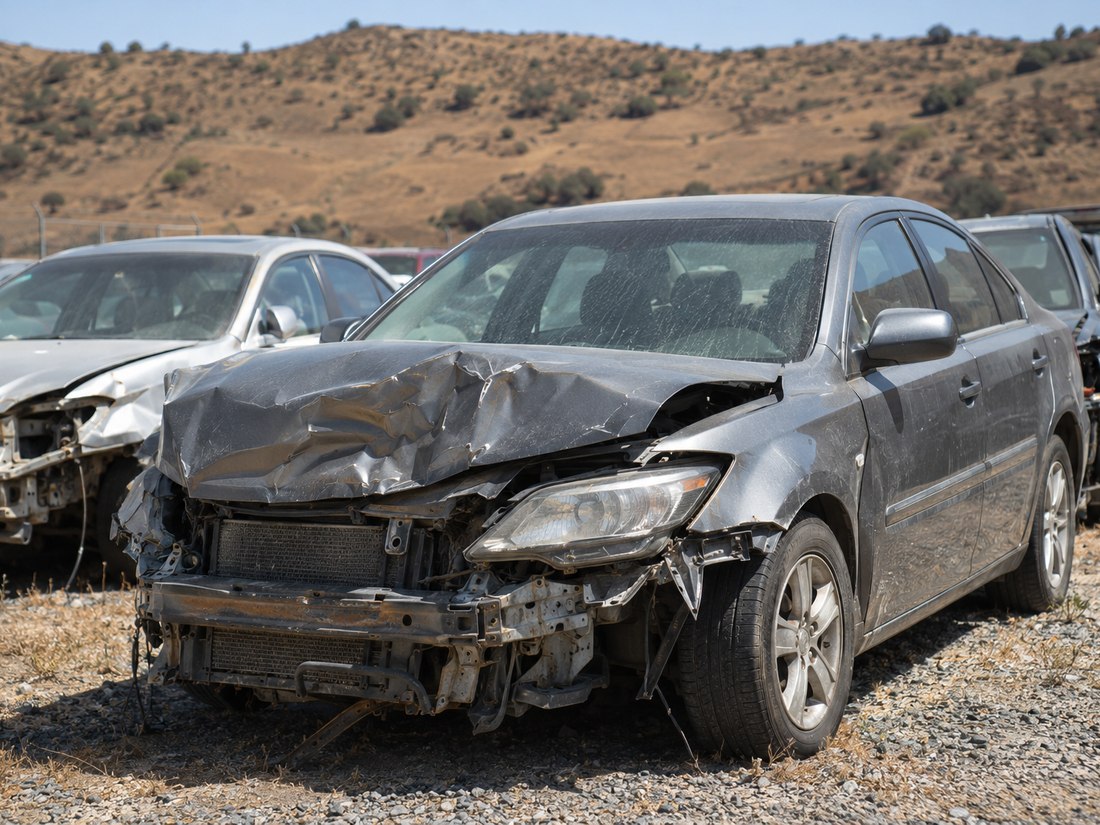
What a San Diego seller's title can say: Salvaged, never rebuilt
The DMV's Branded Titles page opens with eighteen common brands used by most states, Rebuilt and Revived salvage among them. That first list is not California's. Lower down sits the one that is: Salvaged, Original or Prior Taxi, Original or Prior Police, Non-USA (Grey market), Warranty Return or Lemon Law Buyback, Remanufactured, and Park Trailer. Seven brands, and Rebuilt is not among them.
So a car an insurer wrote off, later repaired and registered again, still reads Salvaged on every California title issued for it. Revived salvage is the name of the DMV transaction that puts a repaired salvage car back on the road (DMV manual 19.065). When that paperwork is done, the Bureau of Automotive Repair says, the DMV issues a salvage title.
Source: DMV: Branded Titles; DMV manual 1.025: Branded Titles; DMV manual 19.065: Revived Salvage, California Record; BAR: safety systems inspections for revived salvage vehicles.
When an insurer totals the car: REG 481, REG 488C and 10 days
Under the DMV's manual, an insurer must report a car as a total loss salvage once it considers repair uneconomical. If you keep the car as part of the settlement, the insurer files a Salvage Vehicle Notice of Retention by Owner (REG 481) with the DMV, and the DMV marks the car's record with a Salvage Retention status.
From that point the clock is yours. On the REG 481 the insurer certifies that it told you to turn in the title and plates and apply for a salvage certificate within 10 days of the settlement. The application is the REG 488C, the Application for Salvage Certificate or Nonrepairable Vehicle Certificate, sent with the endorsed title (a REG 227 replaces a lost California title) and the plates. The salvage certificate then becomes the car's ownership document, and the DMV issues it only to the registered owner or the insurance company. With no insurance settlement at all, the DMV's total-loss page makes the certificate the owner's job.
The DMV's fee appendix, read on November 8, 2026, lists $28 for a salvage certificate and $2 for the prior history fee charged when a branded document is first issued. Registration fees still come due whether or not the car is revived, so the manual says to pay them or file a timely Planned Non-Operation (REG 102).
Think the insurer got it wrong? The manual says "there is no statutory authority that allows DMV to modify the total loss salvage status, except when reported by the insurer in error." Lifting it takes a sworn declaration from the insurer's claims manager, signed arbitration or mediation papers calling the car repairable, or a court order.
Source: DMV manual 19.050: Removing Salvage Retention Status; DMV manual 19.045: Notice of Retention by Owner; REG 481 (PDF); DMV manual 19.075: Salvage Certificate; DMV: Total Loss Salvage and Non-Repairable Vehicles; DMV manual 1.025: Branded Titles; DMV manual Appendix 1F: Fees.
Nonrepairable: a car that is parts or scrap metal only
The DMV defines a nonrepairable vehicle as one with no resale value except as a source of parts or scrap metal: a surgical strip (stripped bare when recovered after a theft), a complete burn, or a car its owner irreversibly declared parts-only. The application is the same REG 488C, using its Section 2, on the same 10-day clock from the settlement, and the fee appendix lists $28 for the certificate as of November 8, 2026.
Once a nonrepairable certificate exists, the car cannot be titled or registered for California roads again. It can still be sold, within a limit the manual spells out: "Ownership of a vehicle declared to be nonrepairable may be transferred only twice on the nonrepairable vehicle certificate." The DMV describes a dismantler as a business that buys, sells or deals in salvaged, junked and nonrepairable vehicles. To junk it yourself instead, the junk car guide explains the DMV application that has to come before any dismantling.
Source: DMV manual 19.040: Nonrepairable Vehicle Certificate; DMV manual 19.015: Definitions; DMV: Total Loss Salvage and Non-Repairable Vehicles; REG 488C (PDF); DMV: Junk and Revived Salvage Vehicles; DMV manual Appendix 1F: Fees.
What reviving a salvaged car takes in San Diego County
A buyer who plans to drive the car again must register it as a revived salvage. The DMV's consumer page asks for an Application for Title or Registration (REG 343), proof of ownership (the manual's list starts with the California Salvage Certificate), a Verification of Vehicle (REG 31) or a CHP Certificate of Inspection (CHP 97C), an electronic Vehicle Safety Systems Inspection (VSSI) certificate, and the fees. The manual adds a smog certification where one applies and a $50 Salvage/Dismantled Vehicles Inspection fee, which must be paid before the inspection.
Who looks at the car depends on its history. A previously salvaged California car is inspected by an authorized DMV employee or referred to the CHP; one salvaged in another state must go to the CHP. The DMV lists 1-800-835-5247 for booking a CHP inspection. The VSSI happens at a BAR-licensed station, found with BAR's Auto Shop Locator, which checks body structure, brakes, lights, steering, tires and open recalls, and sends the certificate to the DMV electronically.
In San Diego County, the DMV's San Diego office at 3960 Normal Street and its El Cajon office at 1450 Graves Avenue both list registration among their services. A DMV news release says the San Diego Clairemont office at 4375 Derrick Drive closed at 5 p.m. on November 3, 2026, until further notice, because of damage from a water leak. For southwest Riverside County, Temecula's field office on Diaz Road also lists registration.
Source: DMV: Junk and Revived Salvage Vehicles; DMV manual 19.065: Revived Salvage, California Record; DMV manual 1.060: Junk or Salvage Vehicle VIN Inspections; BAR: safety systems inspections; DMV: San Diego Clairemont office closure, Nov. 3, 2026; DMV: San Diego field office; DMV: El Cajon field office; DMV: Temecula field office.
Selling the salvaged car: disclosure, signatures and your request
Disclosure comes first. The DMV's Branded Titles page says sellers, dealers included, are legally required to disclose a salvage title and history, and the salvage certificate application tells an owner who keeps a total loss: "You should inform any potential purchaser of this fact." Noting it on the Bill of Sale (REG 135) keeps a record.
Signatures follow the certificate. The manual says a salvage certificate is issued to the insurer or to the owner on DMV records when the car was wrecked, never to a later buyer, and that owner or insurer transfers the car through the assignment space on the certificate.
Who is selling matters to BAR. A rebuilder must have the safety systems inspection done before selling and must give the buyer the vehicle safety report or other proof it passed. BAR also says a registered owner selling their own car is not a rebuilder. Licensed dealers must also get a National Motor Vehicle Title Information System report before offering a used car for sale, and post a disclosure on it if the report shows junk or salvage history or the title carries a brand.
To offer a totaled or salvaged car to Sell My Car SoCali, use the form on the request page and spell out the brand the title shows, which certificate you hold and what the crash, flood or fire damaged; or call (657) 699-0008. After a request, a person calls you back.
Source: DMV: Branded Titles; REG 488C (PDF); DMV manual 19.075: Salvage Certificate; DMV: Total Loss Salvage and Non-Repairable Vehicles; DMV manual 19.065: Revived Salvage, California Record; BAR: safety systems inspections; DMV: Junk and Revived Salvage Vehicles.
Flood cars and titles branded in another state
California has no separate flood brand. A car totaled by water gets the Salvaged brand, which the DMV's manual extends to considerable damage from a source other than an accident, such as a flood. One DMV warning sign of a hidden salvage past is mud, mold or rust beneath the trunk carpet.
Cars titled in other states arrive in San Diego County with other wording. The DMV's own page cautions: "While most states put history brands somewhere on their titles, the wording varies from state to state." California's manual says the records and documents of a nonresident vehicle previously classified as salvage must carry one of California's brands, and for salvage that brand is Salvaged. Reviving one follows manual section 19.070: the out-of-state salvage certificate or title goes in with a REG 488C, and section 19.065 sends the car to the CHP for inspection. For other out-of-state title questions, see California title problems.
Source: DMV: Branded Titles; DMV manual 1.025: Branded Titles; BAR: safety systems inspections; DMV manual 19.070: Revived Salvage, New or Nonresident; DMV manual 19.065: Revived Salvage, California Record.
Salvage title questions from San Diego County sellers
Can a repaired salvage car in California get a clean title again?
Not through repairs. A revived car keeps the Salvaged brand, and the DMV says it has no power to change a total loss salvage status unless the insurer reported it by mistake, shown by a sworn insurer declaration, signed arbitration or mediation papers, or a court order (DMV manual 19.050).
My insurer totaled my car but I still have the title. What comes first?
If you are keeping the car, apply for the salvage certificate on a REG 488C and turn in the title and plates within 10 days of the settlement (DMV manual 19.075). If the insurer takes the car, the insurer or its designee (a salvage pool or registration service) applies, with the properly endorsed title as proof of ownership.
Where a salvage title points you next
A car worth more as parts than as transportation belongs in the junk car guide; a title with a lender on it or a missing signature belongs in title problems. To talk a salvaged car through with a person, call (657) 699-0008.
More on selling a car in San Diego
- PaperworkEvery paper in a San Diego County car sale: the California title lines you sign, REG 227 and REG 262, the REG 135 bill of sale, and the DMV offices that do transfers.
- Smog checkWho gets the smog test when you sell a car in San Diego County, how long the 90-day pass lasts, which sales skip it, and what to do with a car that failed.
- Release of liabilityThe 5-day NRL or REG 138 a San Diego County seller files with the DMV: what it covers, what to keep, and how to answer a later ticket, tow or toll notice.
- Junk carHow to junk or sell a dead car in San Diego County: DMV junk status, the City's 72-hour and 4-hour street limits, and county yard rules.
- Title problemsLost pink slip, a loan still on it, an owner who died, or two names joined by AND: the California forms that clear each title problem before a San Diego sale.
- Any conditionSelling a car in San Diego County that will not start, flooded, burned, lost its catalytic converter or shows high miles: what to disclose, smog, and where it can wait.